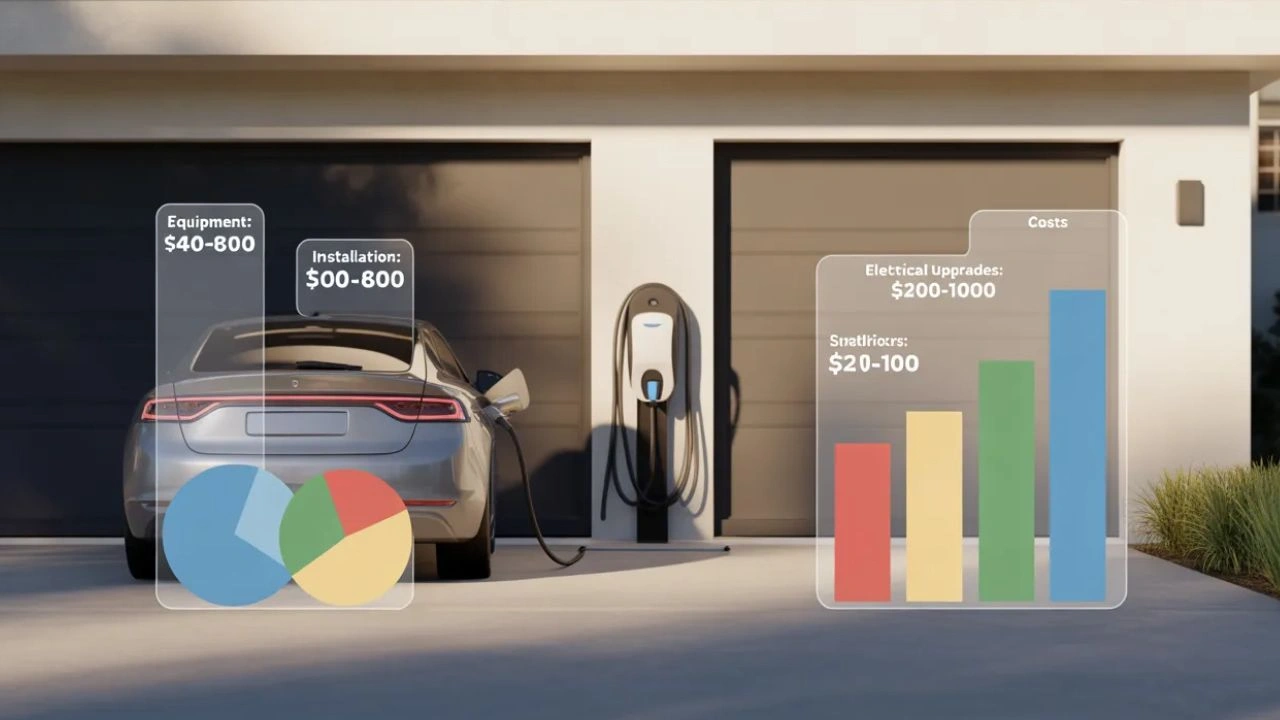
EV Home Charger Installation Cost: Electric vehicles (EVs) are no longer a niche technology—they’re quickly becoming a mainstream choice for drivers seeking lower fuel costs, reduced emissions, and long-term savings. But purchasing an EV is only part of the journey. For most owners, installing a home charging station is the key to convenience, efficiency, and maximizing ownership benefits.
If you’re considering installing an EV charger at home, understanding the full cost breakdown is essential. Installation prices can vary widely depending on equipment, electrical upgrades, permits, labor, and local regulations. This comprehensive guide walks you through every cost factor, hidden expense, and money-saving opportunity—so you can plan your investment confidently.
Why Install a Home EV Charger?
While EVs can charge using a standard household outlet, that method is slow and often impractical for daily use. A dedicated home charging station dramatically improves charging speed and overall experience.
Benefits of Home EV Charging
- Charge overnight while you sleep
- Avoid public charging station wait times
- Lower charging costs compared to public fast chargers
- Increase home resale value
- Access utility rebates and tax credits
For most EV owners, home charging is the most cost-effective and convenient long-term solution.
Read Also: Hyundai i20: A Stylish Premium Hatchback Delivering Performance, Comfort, and Advanced Technology
Types of EV Chargers and Their Costs
Before discussing installation costs, it’s important to understand charger types. Your choice significantly impacts total project expenses.
1. Level 1 Charger (120V)
- Uses a standard household outlet
- Typically included with the vehicle
- Adds 3–5 miles of range per hour
- No special installation required
Cost: $0–$300 (usually included)
Installation Cost: Minimal or none
Level 1 charging is suitable for drivers with short daily commutes but is generally too slow for full EV dependency.
2. Level 2 Charger (240V)
- Requires a dedicated 240V circuit
- Adds 20–40 miles of range per hour
- Most common home charging option
Charger Cost: $400–$900
Installation Cost: $500–$2,500 (varies widely)
Level 2 charging is the standard choice for homeowners and represents the focus of most installation projects.
3. DC Fast Charging (Level 3)
Primarily for commercial settings. Extremely expensive and impractical for residential use.
Cost: $15,000+ (not recommended for homes)
Average EV Home Charger Installation Cost in 2026
Here’s a realistic cost breakdown for a Level 2 installation:
| Cost Component | Estimated Range |
| Charger Unit | $400 – $900 |
| Electrical Labor | $500 – $1,500 |
| Panel Upgrade (if needed) | $1,500 – $4,000 |
| Permit & Inspection | $100 – $500 |
| Total Average Cost | $1,000 – $3,500+ |
In some cases, costs can exceed $5,000 if significant electrical upgrades are required.
Key Factors That Affect Installation Costs
EV charger installation is not one-size-fits-all. Several factors influence pricing.
1. Electrical Panel Capacity
Your home’s electrical panel must have sufficient capacity to handle the additional load.
- Older homes may have 100-amp panels
- Many EV chargers require 40–60 amps
- Upgrading to a 200-amp panel can cost $1,500–$4,000
If your panel has available breaker space and capacity, installation costs stay much lower.
2. Distance from Panel to Charger Location
The longer the wiring run, the higher the labor and materials cost.
- Short run (garage near panel): $500–$800
- Long run (detached garage or outdoor mount): $1,000–$2,000+
Copper wiring prices significantly impact this component.
3. Installation Location
- Indoor garage (cheapest)
- Exterior wall mount
- Detached structure
- Underground trenching required
Trenching and conduit installation can add $500–$2,000+.
4. Permits and Local Code Requirements
Most municipalities require:
- Electrical permit
- Inspection
- Code-compliant installation
Permit costs vary by region but typically range from $100–$500.
5. Smart Charger Features
Modern EV chargers often include:
- Wi-Fi connectivity
- Energy usage tracking
- App-based scheduling
- Integration with solar systems
- Load balancing
Smart chargers cost more upfront but may qualify for rebates.
Hardwired vs. Plug-In EV Chargers
You can choose between two installation types:
Hardwired
- Directly wired into electrical panel
- Cleaner look
- Often required for higher amperage
- Slightly higher installation cost
Plug-In (NEMA 14-50 Outlet)
- Uses 240V outlet
- Easier to replace charger
- May be cheaper upfront
Hardwired setups may cost $100–$300 more but often provide greater long-term durability.
Labor Costs Explained
Electricians typically charge:
- $50–$150 per hour
- 2–6 hours for standard installation
- 8+ hours for complex projects
Highly urban areas tend to have higher labor rates.
Always hire a licensed electrician. DIY electrical work can void warranties, violate code, and create fire hazards.
Hidden Costs You Should Consider
Many homeowners underestimate the following:
1. Panel Upgrade Delays
Utility coordination may be required.
2. Utility Transformer Upgrade
Rare but possible in older neighborhoods.
3. HOA Approval Fees
Some communities require application review.
4. Wall Repair or Drywall Patching
After electrical routing.
5. Outdoor Weatherproofing Materials
Planning for an additional 10–20% contingency is wise.
Federal Tax Credits and Incentives (U.S.)
The federal government offers incentives under the Alternative Fuel Infrastructure Tax Credit.
- Covers 30% of installation cost
- Up to $1,000 for residential installations
State and local utilities may offer additional rebates ranging from $200 to $1,500.
Always check current eligibility requirements before installation.
Cost Comparison: Home Charging vs Public Charging
Public DC Fast Charging
- $0.30–$0.60 per kWh
- Higher cost per mile
Home Charging
- $0.10–$0.20 per kWh (varies by state)
- Significant long-term savings
Over five years, home charging can save thousands of dollars.
Is Solar Integration Worth It?
Pairing EV charging with solar panels can reduce charging costs dramatically.
However:
- Solar installation costs $10,000–$25,000
- Payback depends on energy usage and incentives
If you already have solar panels, adding an EV charger is highly beneficial.
Installation Timeline
- Site evaluation (1–2 days)
- Permit application (3–10 days depending on region)
- Installation day (4–8 hours typical)
- Inspection approval (1–7 days)
Total timeline: 1–3 weeks average.
EV Charger Installation for Renters
Renters face additional challenges:
- Landlord approval required
- May need shared cost arrangement
- Portable Level 2 solutions possible
Some states require landlords to reasonably accommodate EV charger requests.
Smart Charging and Time-of-Use Rates
Many utilities offer lower electricity rates during off-peak hours.
Smart chargers can:
- Automatically charge overnight
- Optimize based on lowest rate window
- Reduce strain on grid
This can reduce charging costs by 20–40%.
Read Also: Volkswagen Tayron R-Line: The Premium Performance SUV Redefining Luxury and Power
Long-Term Maintenance Costs
EV chargers require minimal maintenance.
Possible costs include:
- Software updates (usually free)
- Occasional replacement cable ($150–$300)
- Surge protection upgrades
Overall maintenance is very low compared to gas vehicle upkeep.
Increasing Property Value
Home EV chargers can:
- Increase buyer appeal
- Differentiate property listings
- Add modern infrastructure value
As EV adoption rises, charger-ready homes become more desirable.
How to Reduce Installation Costs
- Install near panel location
- Check for rebates before purchasing charger
- Compare multiple electrician quotes
- Upgrade panel proactively if planning solar
- Schedule installation during non-peak seasons
When Installation Costs Are Highest
- Old homes with outdated wiring
- Detached garages requiring trenching
- Rural areas needing transformer upgrades
- High-end smart home integrations
Understanding these risk factors helps avoid surprises.
Future-Proofing Your Installation
Choose a charger with:
- 48-amp capability
- Over-the-air updates
- Load-sharing capability
- Solar compatibility
Installing higher capacity wiring now may prevent costly upgrades later.
Conclusion: Is It Worth the Investment?
Installing a home EV charger typically costs between $1,000 and $3,500, depending on complexity. While upfront expenses may seem significant, the long-term benefits outweigh the initial cost.
You gain:
- Daily convenience
- Lower energy costs
- Increased home value
- Access to tax credits
- Reduced reliance on public infrastructure
As EV adoption accelerates, home charging becomes not just a luxury—but a practical necessity.
By understanding installation costs, incentives, and potential upgrades in advance, you can make informed decisions that maximize both convenience and financial return.
The transition to electric mobility doesn’t end with purchasing the vehicle. Installing a home EV charger is the step that transforms ownership into a seamless, cost-efficient experience.
If you plan strategically, take advantage of incentives, and hire qualified professionals, your EV charging setup can serve you reliably for years to come—while saving money every mile you drive.
2 thoughts on “EV Home Charger Installation Cost Guide 2026 – Complete Pricing Breakdown”