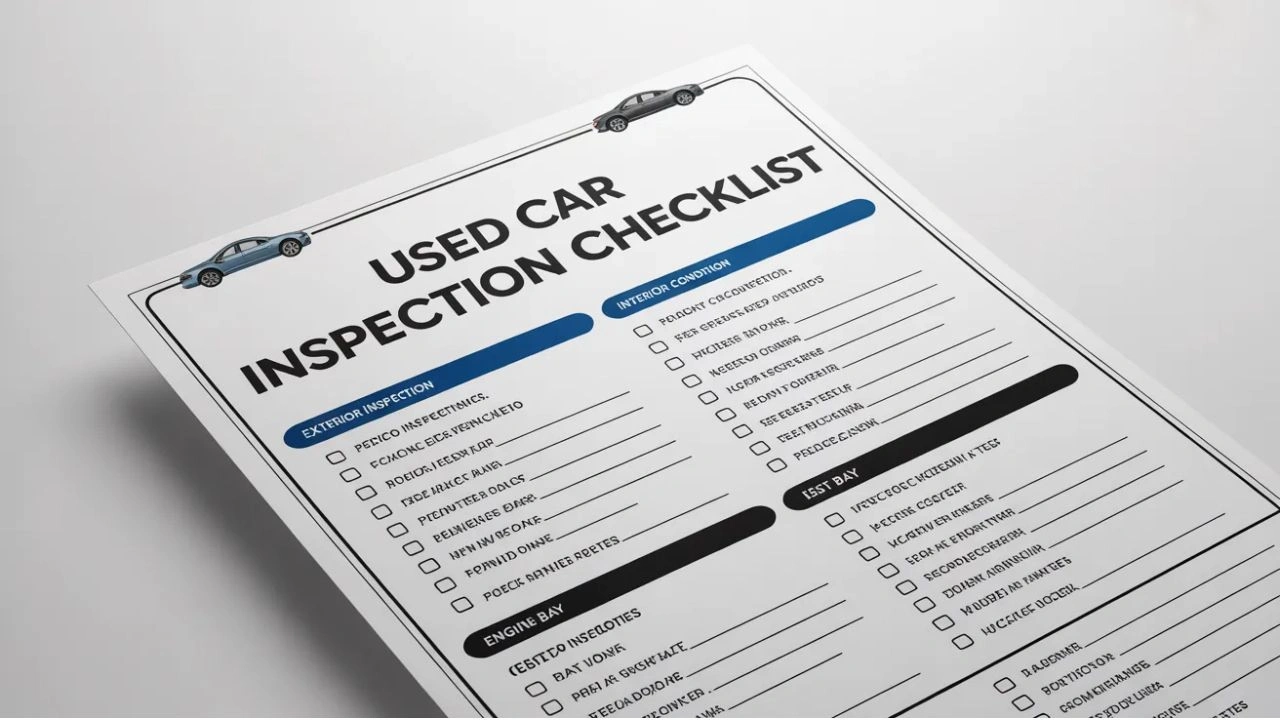
Used Car Inspection Checklist: Buying a used car can be one of the smartest financial decisions you make—if you do it right. With new vehicle prices continuing to rise and depreciation hitting hardest in the first few years, the pre-owned market offers significant value. However, a used car can also hide expensive problems that turn a “great deal” into a financial nightmare.
That’s why having a detailed, structured, and practical used car inspection checklist is not optional—it’s essential.
This comprehensive 2026 guide walks you through everything you must check before buying a used car. Whether you are purchasing from a private seller, dealership, or online marketplace, this step-by-step inspection framework will help you protect your money, avoid hidden damage, and negotiate confidently.
Why a Used Car Inspection Is Critical
A used vehicle does not come with a blank history. It may have:
- Accident damage
- Flood exposure
- Odometer tampering
- Poor maintenance
- Hidden mechanical faults
- Pending major repairs
Even vehicles that look spotless can hide structural or engine issues. A 30–60 minute inspection can save you thousands of dollars in future repairs.
Remember:
You are not buying just a car — you are buying its history.
Pre-Inspection Preparation Checklist
Before even seeing the car in person, do these preliminary checks:
1. Research the Model
Look up:
- Common mechanical issues
- Recall history
- Reliability ratings
- Average resale value
- Cost of spare parts
Certain models are known for transmission problems, engine oil consumption, or electrical failures. Knowing this helps you focus your inspection.
2. Check Market Price
Compare listings of:
- Same year
- Same variant
- Similar mileage
- Same region
If the price is unusually low, there may be a hidden reason.
3. Ask for VIN (Vehicle Identification Number)
With the VIN, you can:
- Check accident history
- Verify ownership records
- Confirm manufacturing details
- Identify recall repairs
Never inspect a car without verifying documentation first.
Exterior Inspection Checklist
The exterior tells a powerful story about how the car was treated.
1. Body Panels and Paint Condition
Walk around the vehicle slowly.
Check for:
- Mismatched paint shades
- Uneven panel gaps
- Overspray near rubber seals
- Dents and scratches
- Rust spots
Uneven panel alignment often indicates accident repair.
Small scratches are cosmetic. Structural misalignment is not.
Magnet Test Tip
Bring a small magnet. If it doesn’t stick in certain areas, body filler may be hiding repairs.
2. Rust Inspection
Rust can be expensive to repair.
Check:
- Wheel arches
- Under doors
- Underbody
- Around windshield
- Trunk floor
Surface rust is manageable. Structural rust is a deal-breaker.
3. Windshield and Windows
Look for:
- Cracks or chips
- Fogging between glass layers
- Scratched glass
Windshield replacement can be costly, especially in vehicles with advanced driver assistance systems (ADAS).
4. Lights and Indicators
Test:
- Headlights (low and high beam)
- Fog lamps
- Turn signals
- Brake lights
- Reverse lights
Non-working lights may indicate electrical issues beyond just bulbs.
5. Tires and Wheels
Tires reveal alignment and suspension health.
Check:
- Uneven tread wear
- Cracks on sidewalls
- Manufacturing date (older than 5 years is risky)
- Wheel rim damage
Uneven wear may suggest:
- Poor wheel alignment
- Suspension damage
- Accident history
Replacing four tires can be expensive — factor this into negotiation.
Interior Inspection Checklist
The cabin condition reflects overall vehicle care.
1. Upholstery and Seats
Check for:
- Tears
- Stains
- Sagging cushions
- Broken seat adjustments
Excessive wear on the driver seat with low mileage may indicate odometer rollback.
2. Dashboard Warning Lights
Turn the ignition ON without starting.
All warning lights should briefly illuminate, then turn off after starting.
Watch for:
- Check Engine Light
- ABS Light
- Airbag Warning
- Battery Warning
- Oil Pressure Light
If warning lights remain on, request a diagnostic scan immediately.
3. Air Conditioning and Heating
Test:
- Cooling efficiency
- Fan speeds
- Heating
- Unusual smells
AC compressor repair can be expensive.
4. Infotainment and Electronics
Check:
- Touchscreen response
- Bluetooth connectivity
- USB ports
- Steering controls
- Power windows
- Central locking
- Power mirrors
Electrical issues can be difficult and costly to diagnose.
Engine Inspection Checklist
The engine is the heart of the vehicle. This section demands careful attention.
1. Visual Inspection Under the Hood
Before starting the engine, look for:
- Oil leaks
- Coolant leaks
- Cracked hoses
- Corroded battery terminals
- Loose wiring
- Dirty engine bay hiding leaks
A freshly washed engine bay may hide leaks — be cautious.
2. Engine Oil Check
Pull the dipstick.
Oil should:
- Be between min and max levels
- Not smell burnt
- Not appear milky (milky oil indicates coolant mixing)
Milky oil can signal head gasket failure — a major red flag.
3. Start the Engine Cold
Ask the seller not to warm the engine before you arrive.
Listen for:
- Knocking sounds
- Ticking noises
- Rough idle
- Excessive vibration
A smooth idle is a good sign.
4. Exhaust Smoke Check
Observe tailpipe smoke:
- White smoke (persistent) → coolant issue
- Blue smoke → burning oil
- Black smoke → fuel system issue
Minor vapor in cold weather is normal. Thick smoke is not.
Transmission Inspection
Transmission repairs are among the most expensive automotive repairs.
For Manual Transmission:
- Clutch should not slip.
- No grinding while shifting.
- The clutch pedal should not feel too hard or too soft.
For Automatic Transmission:
- Smooth gear shifts.
- No delay when shifting from Park to Drive.
- No jerking or hesitation.
Transmission rebuilds can cost thousands — test carefully.
Suspension and Steering Check
Drive over uneven roads.
Watch for:
- Clunking noises
- Excessive bouncing
- Steering pulling to one side
- Vibrations at high speed
Poor suspension affects safety and comfort.
Brake System Inspection
During the test drive:
- Brake should feel firm.
- No vibration while braking.
- No squealing or grinding noise.
- Vehicle should not pull to one side.
Replacing brake pads is affordable.
Replacing rotors or calipers is more expensive.
Test Drive Checklist
Never skip the test drive.
Drive:
- In traffic
- On highway
- On rough roads
- During turns
- During hard braking
Observe:
- Acceleration smoothness
- Steering response
- Cabin noise
- Engine performance
- Gear transitions
The test drive reveals more than a static inspection ever will.
Underbody Inspection
If possible, check under the vehicle:
Look for:
- Oil leaks
- Rust damage
- Bent frame parts
- Damaged exhaust
Flood-damaged cars often show rust in unusual areas.
Service History Verification
Ask for:
- Service records
- Maintenance invoices
- Oil change history
- Major repair receipts
A well-maintained vehicle should have documentation.
No records = higher risk.
Read Also: Hyundai Tucson India Launch Expected on June 2026: A Premium SUV Ready to Raise the Bar
Odometer Fraud Warning Signs
Watch for:
- Pedal wear inconsistent with mileage
- Steering wheel worn out
- New seat covers hiding damage
- Inconsistent service records
Modern cars make tampering harder, but not impossible.
Professional Pre-Purchase Inspection (PPI)
Even after personal inspection, consider hiring a mechanic.
A certified mechanic can:
- Scan onboard diagnostics
- Inspect suspension lift
- Check compression
- Verify structural integrity
Spending $100–$200 for inspection can save thousands.
Hybrid & EV Used Car Special Checklist
If buying hybrid or electric:
Check:
- Battery health report
- Warranty coverage remaining
- Charging history
- Regenerative braking performance
Battery replacement cost is significant — verify capacity levels carefully.
Negotiation Strategy After Inspection
Once you identify issues:
- Estimate repair costs.
- Present facts calmly.
- Deduct repair estimate from asking price.
- Be ready to walk away.
The strongest negotiation power is the ability to leave.
Common Red Flags to Walk Away Immediately
- Seller refuses test drive
- Missing documents
- Title issues
- Flood damage signs
- Engine knocking
- Severe rust
- Major warning lights on dashboard
If something feels suspicious, trust your instincts.
Final Decision Checklist
Before handing over payment:
- Verify title ownership
- Confirm no pending loans
- Double-check VIN matches documents
- Ensure insurance transfer possible
- Sign proper sale agreement
Never rush the paperwork stage.
Conclusion: Smart Buyers Inspect, Emotional Buyers Regret
A used car can be a fantastic financial move — or a costly mistake. The difference lies in inspection discipline.
By following this comprehensive used car inspection checklist:
- You reduce financial risk.
- You gain negotiation confidence.
- You avoid hidden repairs.
- You make data-driven decisions.
Remember:
The goal is not to find a perfect used car. The goal is to find a well-maintained one at the right price.
In 2026’s competitive automotive market, informed buyers win.
Take your time. Inspect thoroughly. Verify everything.
Your future self — and your bank account — will thank you.
1 thought on “Used Car Inspection Checklist Before Buying: The Complete 2026 Buyer’s Guide to Avoid Costly Mistakes”